
Find your path to pelvic organ prolapse relief
No two people walk the same path to a diagnosis or solution. Every woman’s prolapse journey is different, and they may reach these steps at different paces and during different times in their lives.
Are the symptoms you’re experiencing more than just an inconvenience? Learn about the signs and causes of pelvic organ prolapse.

There are several different types of pelvic organ prolapse, with different names depending on the organs involved.
Learn more

While it is not life-threatening, women with prolapse experience symptoms that impact their day-to-day lives and keep them from experiencing moments to the fullest.
Learn more


The right doctor will listen to you and put your needs first. But how do you find them?
Find a specialist


What is prolapse?
Pelvic organ prolapse (POP) is the descent of the pelvic organs caused by the loss of normal support of the pelvic floor.
POP occurs when there is weakness or damage to the normal support of the pelvic floor causing pelvic organs (the vagina, cervix, uterus, bladder, urethra, intestines or rectum) to drop down.
Up to 50% of women present evidence of POP during a medical examination.1
Experiencing pelvic organ prolapse can be challenging — it can interfere with your activities, intrude on your personal life, and cause some serious discomfort.2
Types of prolapse
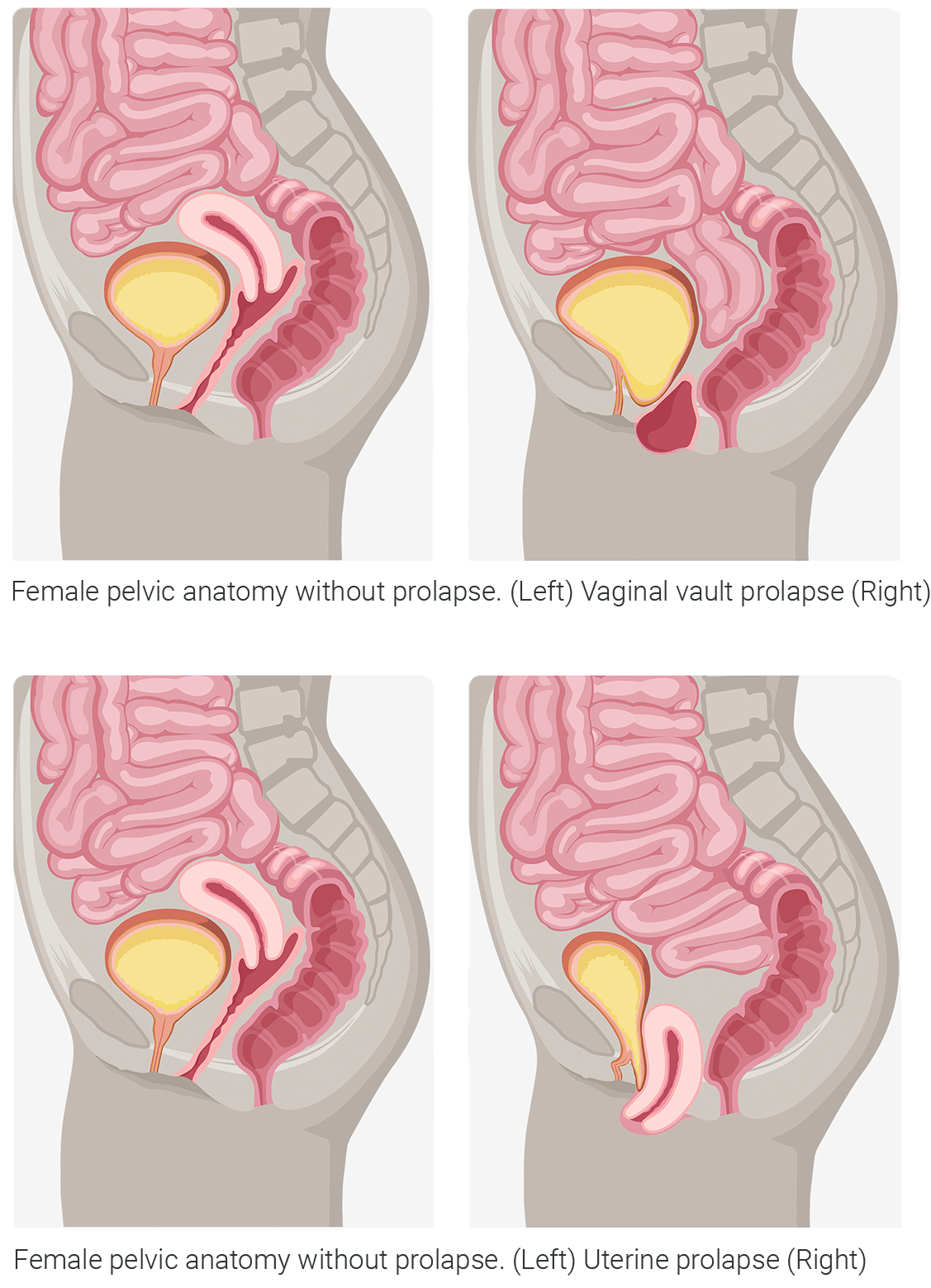
There are several different types of pelvic organ prolapse, with different names depending on the organs involved.2
Female pelvic anatomy without prolapse
Anterior Vaginal Wall Prolapse (Cystocele)
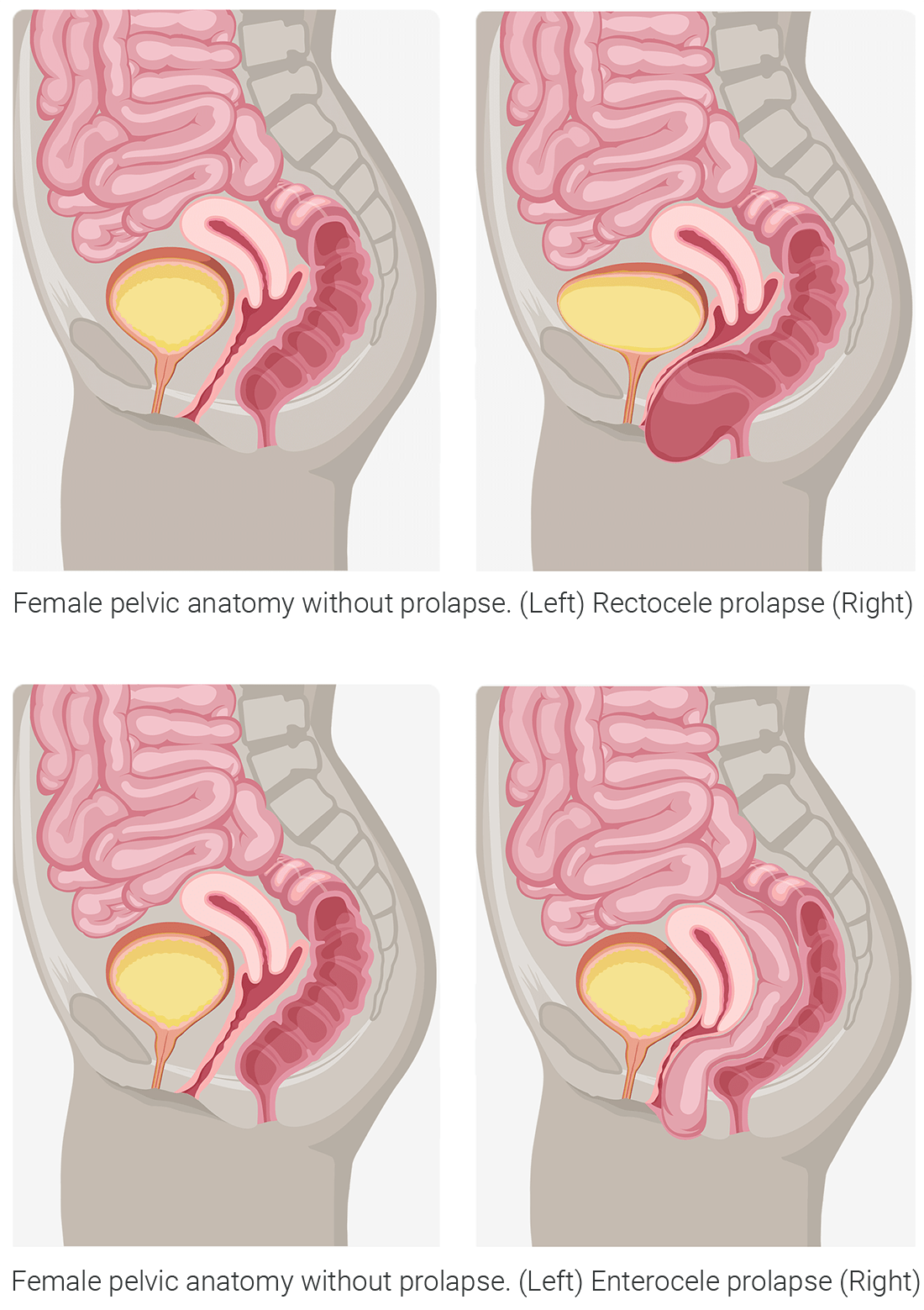
occurs when there is a loss of support to the front wall of the vagina. The bladder drops down and may cause a bulge in the vaginal opening.Posterior Wall Prolapse (Rectocele or Enterocele)
occurs when there is a loss of support to the back wall of the vagina. The rectum or intestines drops down and may cause a bulge in the vaginal opening.Apical Prolapse (Vaginal vault or Uterine)
occurs when there is a loss of support to the uterus and the top part of the vagina after a hysterectomy. These types of prolapse are often associated with the loss of anterior or posterior vaginal wall support.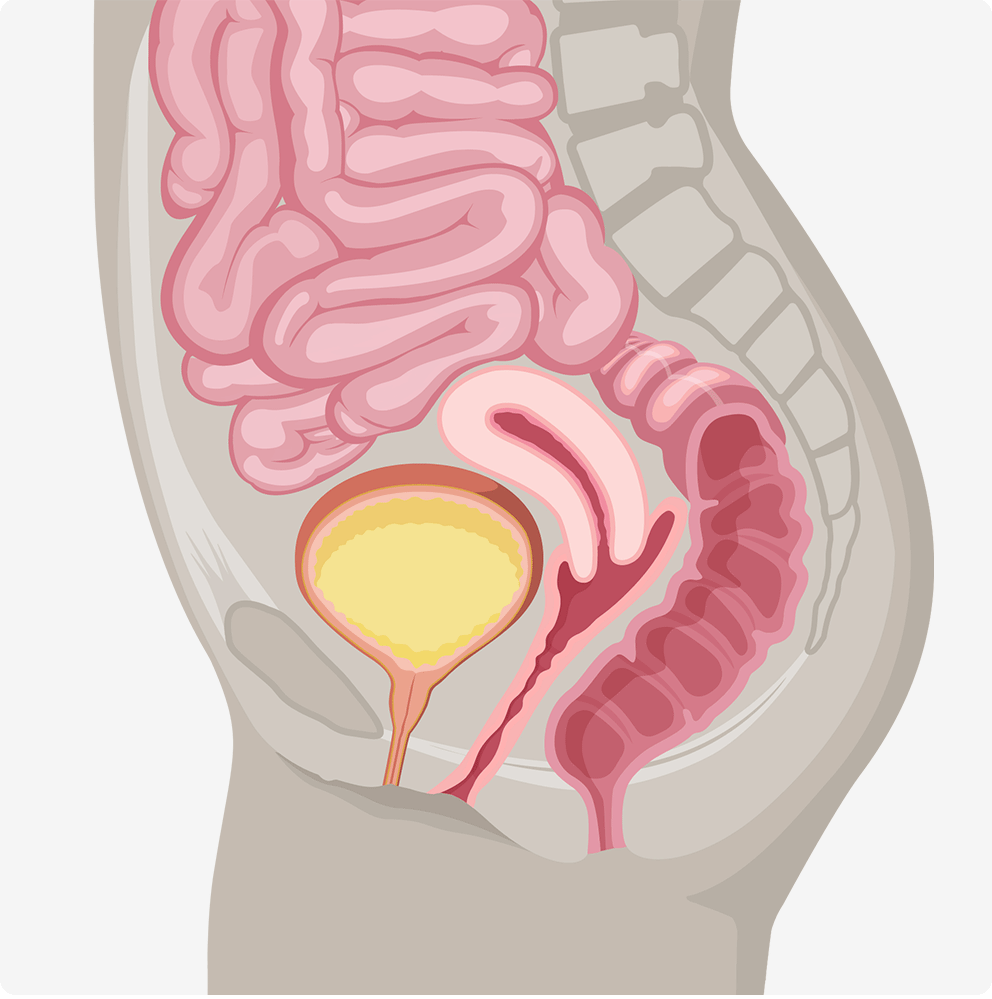
Female pelvic anatomy without prolapse
Female pelvic anatomy without prolapse
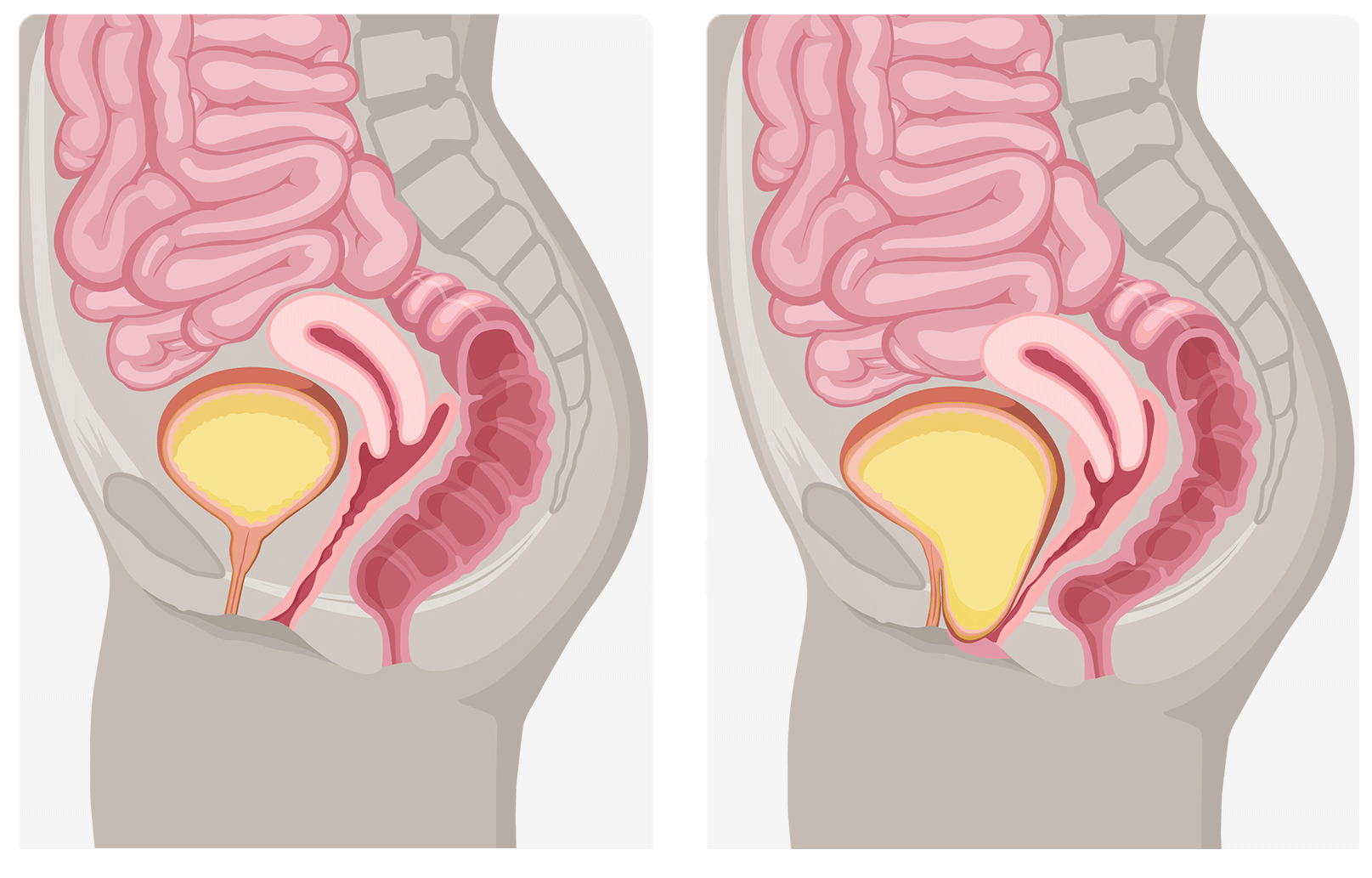 Female pelvic anatomy without prolapse (Left).
Cystocele prolapse (Right).
Symptoms of prolapse
While it is not life-threatening, women with prolapse experience symptoms that impact their day-to-day lives and keep them from experiencing moments to the fullest. But these symptoms won’t always seem obvious. As prolapse progresses, the symptoms may become more apparent and painful. If you are experiencing prolapse, you may feel:2
- Pressure in the pelvic region, vaginal discomfort, pain or bleeding
- Pulling or aching in the lower abdomen or pelvis, a bulge coming out of the vagina
- Pain or discomfort during sex
- Difficulty urinating or having a bowel movement
Symptoms of prolapse
While it is not life-threatening, women with prolapse experience symptoms that impact their day-to-day lives and keep them from experiencing moments to the fullest. But these symptoms won’t always seem obvious. As prolapse progresses, the symptoms may become more apparent and painful. If you are experiencing prolapse, you may feel:2
- Pressure in the pelvic region, vaginal discomfort, pain or bleeding
- Pulling or aching in the lower abdomen or pelvis, a bulge coming out of the vagina
- Pain or discomfort during sex
- Difficulty urinating or having a bowel movement
What causes prolapse?
Pelvic organ prolapse can drastically impact your lifestyle. Things that can cause the muscles in the pelvis to become stretched or weakened include:2,3
- Pregnancy or childbirth
- Menopause
- Pelvic floor injury
- Genetics
- Nerve and muscle disease
- Obesity
- Chronic constipation
- Chronic coughing
What causes prolapse?
Pelvic organ prolapse can drastically impact your lifestyle. Things that can cause the muscles in the pelvis to become stretched or weakened include:2,3
- Pregnancy or childbirth
- Menopause
- Pelvic floor injury
- Genetics
- Nerve and muscle disease
- Obesity
- Chronic constipation
- Chronic coughing

Understanding treatment options
There’s nothing simple about dealing with prolapse, but there are treatment options. Your physician may recommend some of these non-surgical options as a first step to relief:
- Vaginal pessary: a removeable device placed in the vagina to support the pelvic floor and support the prolapsed organ. Your physician will fit and insert the pessary, which must be cleaned frequently and may have to be removed before intercourse.1
- Kegels: an exercise you can do on your own or with the guidance of a pelvic floor therapist to help strengthen your pelvic floor muscles.2
- Biofeedback therapy: a technique that uses different types of devices to give information on how well pelvic muscles are contracting. This information can help improve awareness and control of pelvic floor muscles.4
It is important to note that while these non-surgical treatments can help control symptoms and limit the worsening of prolapse, they may not correct it.
Non-surgical options aren’t the only approach.
If prolapse is affecting your everyday life, you may want to consider moving forward with surgical treatment. Prolapse can be repaired rather than just managed.1
Surgical solutions are effective in repairing POP at the source of the symptoms, so you can get back to living the life you want.
Following a thorough review of symptoms and impact of prolapse on your life, your physician will perform a pelvic exam and recommend a procedure based on your type of prolapse and your medical history.

What are the outcomes?
Women experiencing POP deserve a clinically proven and effective solution that lasts.
Prolapse repair procedures have effective outcomes.5
0 %
of patients were “satisfied”
or “very satisfied”
0 %
of patients stated they
would definitely “do it all over again” if they had the chance
0 %
stated they “would definitely recommend to a friend”
Patient spotlight
Stacy & Tina’s stories
“I really feel like I’m getting my life back.”
– Stacy, living with POP

Find a specialist
Locate a pelvic surgery specialist near you

Take back your normal
Locating a doctor with the expertise and empathy to treat your condition is key. You’re probably wondering, “Is there a pelvic surgical specialist near me?” We’ve got that covered.
Simply enter your ZIP code to see a listing of pelvic doctors in your area. Each listing provides the doctor’s name and area of pelvic health expertise, along with their website, phone number and distance from your home.
By dialing one of the phone numbers below, you consent to Coloplast connecting you with a physician and to the collection of your personal information for Coloplast’s quality improvement activities in accordance with the Coloplast Privacy Policy.
This directory was created and is maintained by Coloplast. It is intended to support patients who want to learn more about treatment options for stress urinary incontinence (SUI) and pelvic organ prolapse (POP) by helping connect them to physicians who have demonstrated qualifications and interest in providing quality care for these conditions. Names and details in this directory are provided for your information only. Decisions regarding choice of physician and treatment are a patient’s responsibility, as is all communication and interaction with listed medical professionals. Any information you send to a physician is not covered by the Coloplast Privacy Policy.
Physicians listed on the Physician Locator pay no fee for inclusion. Some physicians on this list may purchase products from, provide consulting services to and/or be a party to a co-marketing agreement with Coloplast. Coloplast makes no representations or warranties regarding, and shall not be responsible for, the competencies or skill level of any of the physicians listed on the Physician Locator or the quality of their procedural outcomes. You and your physician must determine the right procedure for you.
Important safety information
Restorelle® M, L, XL, Y and Y Contour Polypropylene Mesh
Important Safety Information
Restorelle is a polypropylene mesh device intended to treat uterine or vaginal vault pelvic organ prolapse in women. Restorelle is surgically implanted through a small incision in the abdomen to act as a support to weak or damaged muscles of the uterus or vaginal vault (top of the vagina). Once implanted, the mesh is permanent and not intended to be removed.
Restorelle M, L, XL, Y and Y Contour are indicated for use as a bridging material for sacrocolposuspension/sacrocolpopexy (transabdominal placement via laparotomy, laparoscopic, or robotic approach) where surgical treatment for vaginal vault prolapse is warranted.
Restorelle M, L, XL, Y and Y Contour are not for females who have the following conditions:
- Pregnancy or desire for future pregnancy
- Potential for further growth (e.g., adolescents)
- Pre-existing local or systemic infection. Treat the infection with the appropriate antiseptics and/or antibiotics to eliminate the infection before placing the Restorelle M, L, XL, Y and Y Contour mesh
- Taking blood thinning medications (anticoagulant therapy)
- Any condition, including known or suspected pelvic pathology, which could compromise implant or implant placement
- Sensitivity/allergy to polypropylene
Check with your Physician on the warnings, precautions and risks associated with the use of this mesh. The effectiveness of Restorelle Y Contour has not been validated by a prospective, randomized clinical trial. A thorough assessment of each patient should be made to determine the suitability of a synthetic mesh procedure.
Check with your physician on:
- alternative prolapse treatments that may be appropriate
- the reason for choosing a surgical mesh procedure
- the postoperative risks and potential complications of transabdominal mesh surgery
- the mesh to be implanted is a permanent implant
- some complications associated with the implanted mesh may require additional surgery; repeat surgery may not resolve these complications
- serious adverse tissue responses or infection may require removal of the mesh and complete removal of the mesh may not always be possible
- individuals who have varying degrees of collagen laydown that may result in scarring
As with all surgical procedures, patients with certain underlying conditions may be more susceptible to postoperative bleeding, impaired blood supply, compromised/delayed healing, or other complications and adverse events.
The risks and benefits of using Restorelle M, L, XL, Y or Y Contour should be considered in patients with: • Age-related underlying conditions • Autoimmune disease • Coagulation disorder • Connective tissue disorder • Debilitated or immunocompromised state • Diabetes • Pelvic radiation therapy or chemotherapy • Physical characteristics (e.g., body mass index) • Smoking-related underlying conditions • Urinary tract anomalies.
Any future pregnancy could negate the benefits of this surgical procedure. Patients should report any bleeding, pain, abnormal vaginal discharge or sign of infection that occur at any time.
Adverse events are known to occur with transabdominal synthetic mesh procedures and implants. Adverse events following mesh implantation may be new onset (de novo), persistent, worsening, transient, or permanent.
Adverse events may include but are not limited to: • Abscess (acute or delayed) • Adhesion/scar formation • Allergy, hypersensitivity or other immune reaction • Bleeding, hemorrhage or hematoma • Bowel Related (Bowel obstruction, Constipation and/or defecatory dysfunction, Fecal incontinence and/or anal sphincter incompetence, temporary inability to pass food and waste through the intestine (ileus)) • Reopening of surgical incision (dehiscence) • Delayed wound healing • Extrusion, erosion or exposure of mesh into the vagina or other structures or organs • Formation of abnormal connection or passageway that forms between two structures in the body (fistula) • Infection • Inflammation (acute or chronic) • Local irritation • Mesh migration • Tissue death (necrosis) • Pain Related (new onset (de novo) and/or worsening painful intercourse (dyspareunia), Neuromuscular symptoms (acute or chronic), Pain (acute or chronic), Partner pain and/or discomfort during intercourse) • Perforation or injury of soft tissue (e.g., ligaments, muscles, nerves, vessels), structures, or organs (e.g., bowel, rectum, bladder, urethra, ureters, vagina) • Fluid buildup at site of surgery (seroma) • Suture erosion • Urinary Related (Bladder storage dysfunction (e.g., increased daytime frequency, urgency, nocturia, overactive bladder, urinary incontinence), Ureteral obstruction, Urinary tract infection, Voiding symptoms (e.g., painful urination (dysuria), urinary retention, incomplete emptying, straining, positional voiding, weak stream)) • Vaginal Related (new onset (de novo) or worsening prolapse in untreated compartment, abnormal wound healing (granulation tissue formation), Palpable mesh (able to be felt by patient and/or partner), Recurrent prolapse, Sexual dysfunction, Vaginal discharge (abnormal), Vaginal scarring, tightening, rigidity, shortening and/or contracture).
The occurrence of adverse events may require one or more revision surgeries, including removal of the mesh. Complete removal of the mesh may not always be possible, and additional surgeries may not always fully correct the complications. There may be unresolved pain with or without mesh explantation.
This treatment is prescribed by your physician. Discuss the treatment options with your physician to understand the risks and benefits of the various options to determine if a transabdominal mesh procedure is right for you.
Caution: Federal law (USA) restricts this device to sale by or on the order of a physician.
PM-07280 / 02.2024
References:
- Collins S, Lewicky-Gaupp C. Pelvic Organ Prolapse. Gastroenterol Clin North Am. 2022 Mar;51(1):177-193.
- Smith TA, Poteat TA, Shobeiri SA. Pelvic organ prolapse: an overview. JAAPA. 2014 Mar;27(3):20-4; quiz 33.
- Maher C, Feiner B, Baessler K, Schmid C. Surgical management of pelvic organ prolapse in women. Cochrane Database Syst Rev. 2013;(4):CD004014. Published 2013 Apr 30.
- Zhong F, Miao W, Yu Z, Hong L, Deng N. Clinical effect of electrical stimulation biofeedback therapy combined with pelvic floor functional exercise on postpartum pelvic organ prolapse. Am J Transl Res. 2021;13(6):6629-6637. Published 2021 Jun 15.
- Culligan PJ, Lewis C, Priestley J, Mushonga N. Long-Term Outcomes of Robotic-Assisted Laparoscopic Sacrocolpopexy Using Lightweight Y-Mesh. Female Pelvic Med Reconstr Surg. 2020;26(3):202-206. doi:10.1097/SPV.0000000000000788.
PM-26180